ProAI: Turning a Consulting Practice Into an AI Product
How a self-funded team turned pre-ChatGPT language models into consulting-grade business plans, financial models and market research, and reached 300,000+ users without outside capital.
Case study, 2022–2025. Founder and Head of Product.
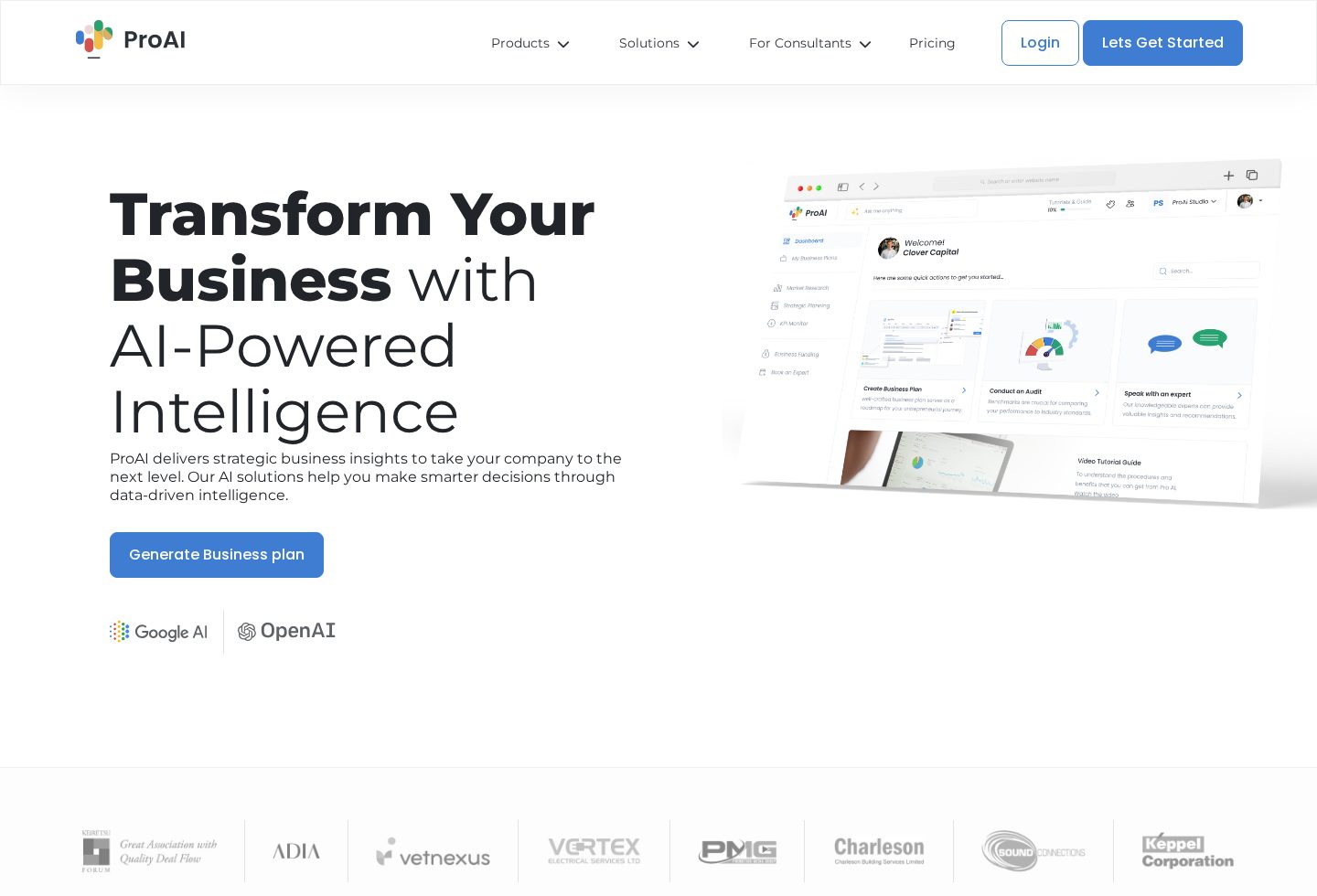
- Role
- Founder and Head of Product. Owned strategy, product, design and go-to-market.
- Team
- Up to 15 across product, design and engineering on three continents, plus an AI/ML research partner.
- Timeline
- Research in early 2022. Public launch around ChatGPT's release. Acquired in 2025.
- Customers
- Founders and small businesses, plus advisors at SBDCs, Keiretsu Forum and boutique M&A, CPA and consulting firms.
00
The problem
By early 2022 my consulting firm, Pro Business Plans, was having its best years. We had moved a mostly in-person practice to a remote one and served 3,600+ clients. But rising interest rates were about to hit the top of our market: M&A and mid-to-late-stage venture.
The larger, unserved market sat below us. Founders and small businesses who would never pay for consulting were using DIY tools like LivePlan and Upmetrics, which were well-built template generators. I wanted a product for that tier without diluting the consulting brand.
While testing what natural-language tools could do, I started working with OpenAI’s completions API. This was before ChatGPT and before a chat API existed. The output was weak, but it was clear where it was heading. That became ProAI.
01
Getting early models to write consulting-grade documents
A business plan is 30+ pages, and it has to agree with itself. Early models had small context windows. Retrieval from vector stores caused facts to drift between sections: a market size on page 4 would disagree with page 19.
- Chunked generation with threaded context. I broke each document into sections and passed a structured JSON summary of earlier sections into each new call, so later sections stayed consistent with earlier ones.
- Many-shot, then fine-tuning. Zero-shot writing quality was poor. I used many-shot examples for each section, then fine-tuned on our proprietary consulting dataset. That was the edge competitors could not copy.
- Templates over zero-shot. Some early competitors generated whole documents zero-shot and later pivoted to templates. I went the other way from the start: the model wrote content into JSON, and we placed it into proven templates from our consulting practice. We gave up open-ended flexibility in exchange for consistent, consulting-grade output every time.
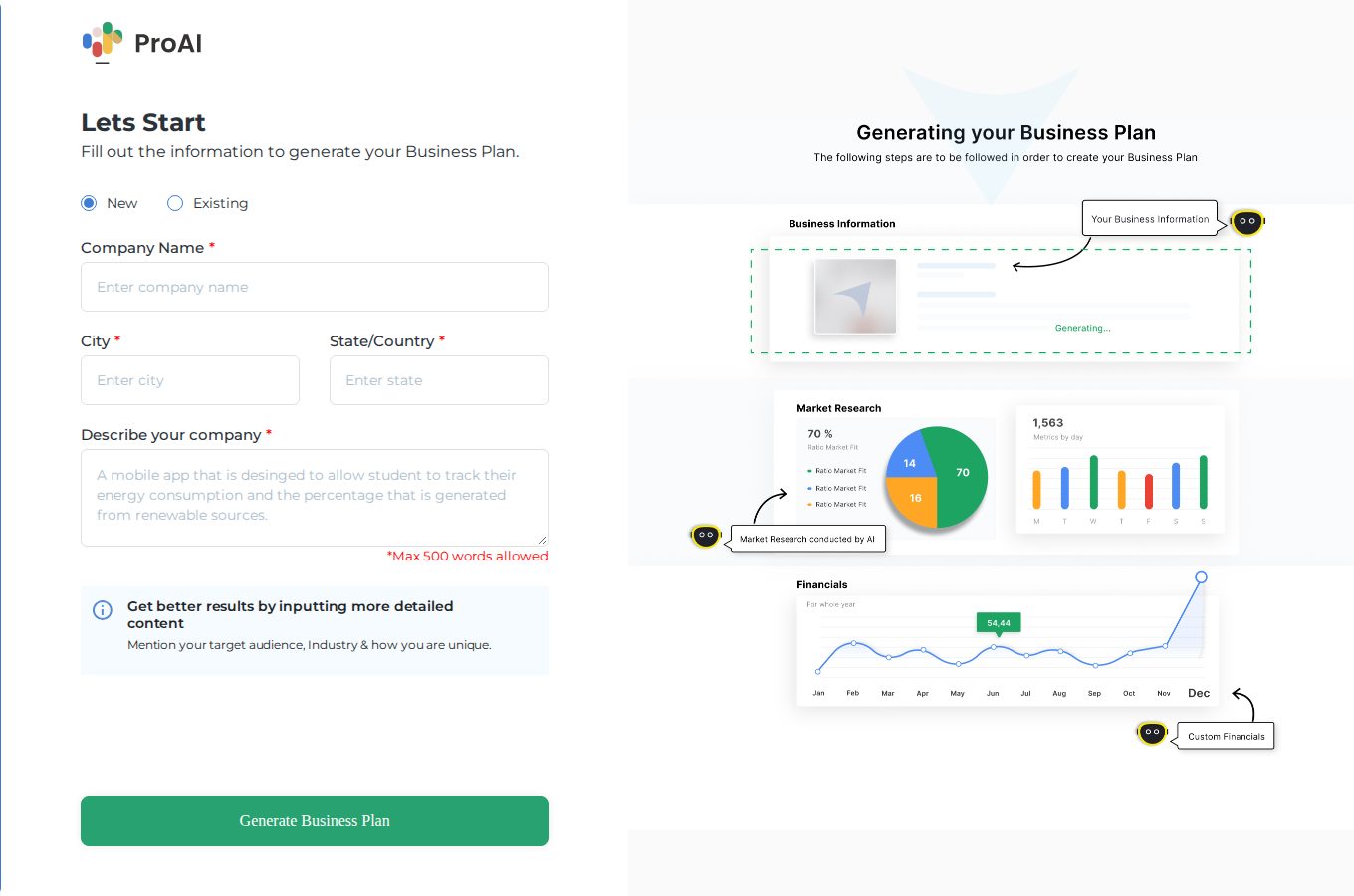
- Export as the product. Competitor reviews kept naming the same complaint: users couldn’t get their plan out and edit it. So instead of rebuilding a full web editor (this was before useful AI coding tools), we generated natively into Google Workspace and Microsoft Office formats.
02
Financial models an LLM couldn’t break
This was the hardest problem. Before reasoning models, LLMs could not reliably do arithmetic, let alone a multi-tab, linked financial model with several kinds of capital, depreciation schedules and cash flow. Building the whole model engine in Python would have been slow and error-prone, and it would have delayed launch.
I split the problem by what each part does well:
- ProbabilisticLLM drafts assumptionsGrowth, margins and cost structure, from the user's earlier answers.
- DeterministicPython validator checksFormulas resolve, and margins sit inside the NAICS industry benchmark range. If not, values are nudged and re-checked.
- DeterministicSpreadsheet computesPredefined, linked formulas. The LLM never wrote a formula.
The result kept the flexibility of an LLM with the consistency of a rules engine. Once we had more room after launch, we rebuilt the model inside the product with its own forecasting editor, which also helped retention. A later multi-agent version of the financial-modeling framework (Q1 2024) cut plan-generation time by 50%.
03
Turning market research into its own product
The first versions left market research out because of hallucination risk. Instead of patching that, I looked at how the big industry-research publishers actually produce their reports. Most combine public data with a forecasting method, are updated infrequently, and depend on low-cost manual work.
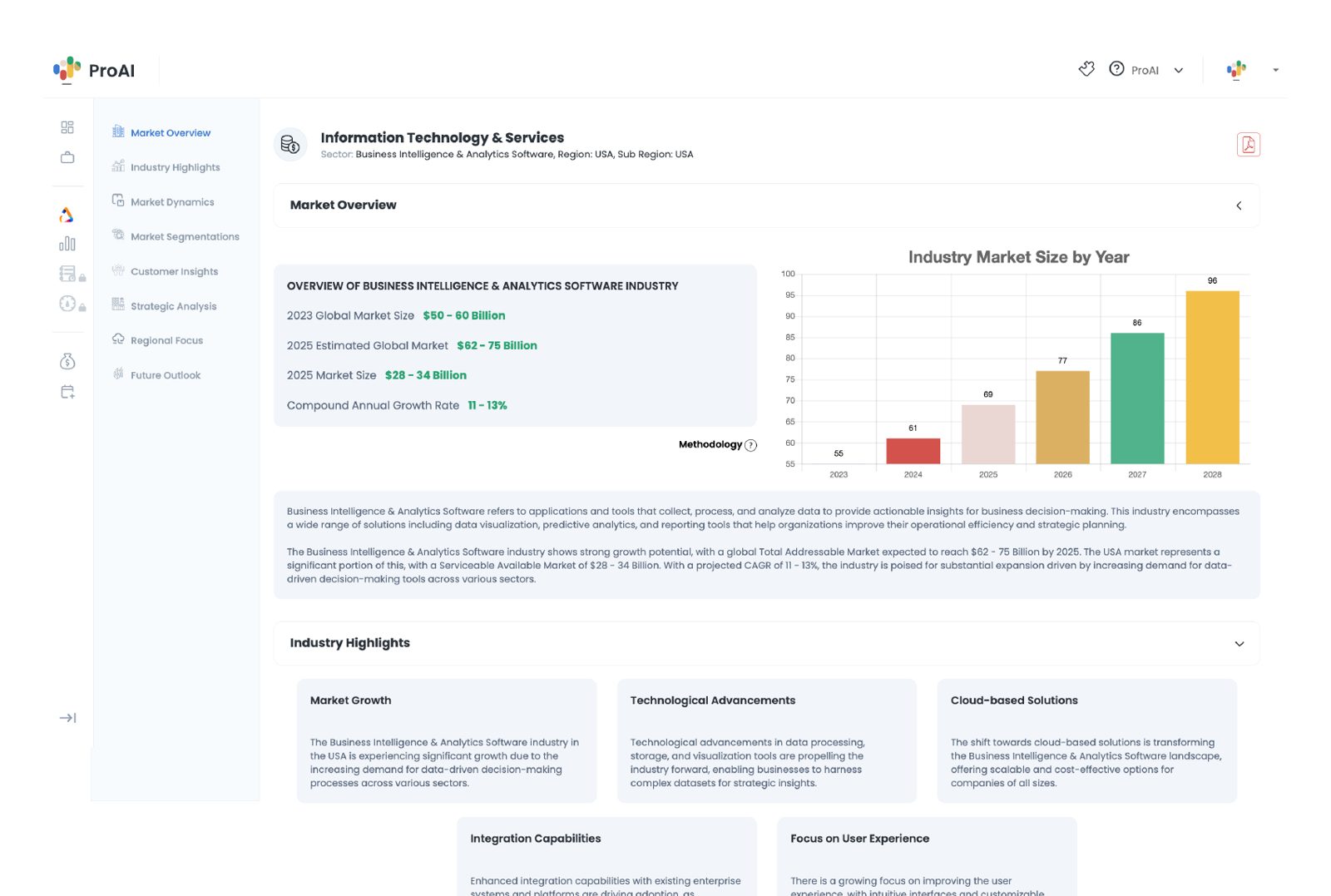
- A deterministic pipeline. We pulled US Census and BLS data, then had the LLM reason over the methodology to estimate market size, share and growth, so every figure traced back to a source.
- IBISWorld-style distribution. We published research pages publicly to earn citations and inbound traffic.
- Sold as an upgrade. Market research launched as a paid add-on for existing users and lifted ARPU by about 30%.
- Agentic research. In 2023, working with an engineering team in Pune and using Microsoft’s AutoGen research as a reference, we gave the research step limited autonomy over which sources to pull. Today that would be called an AI workflow.
04
Launch: price the output, not the access
The risk at launch was behavior, not technology. Users in late 2022 were used to drag-and-drop template editors, and most had never finished a task with generative AI.
- Cheap, observable tests. I launched ProAI on a subdomain of the consulting site and ran paid traffic in lower-cost ad markets. That let me watch live sessions, live chat and funnel drop-off before spending at scale.
- The RocketLawyer pattern. Competitors put the product behind a paid registration. We showed a sample first, asked for registration, then generated the full plan and showed it watermarked. Users paid to download and edit.
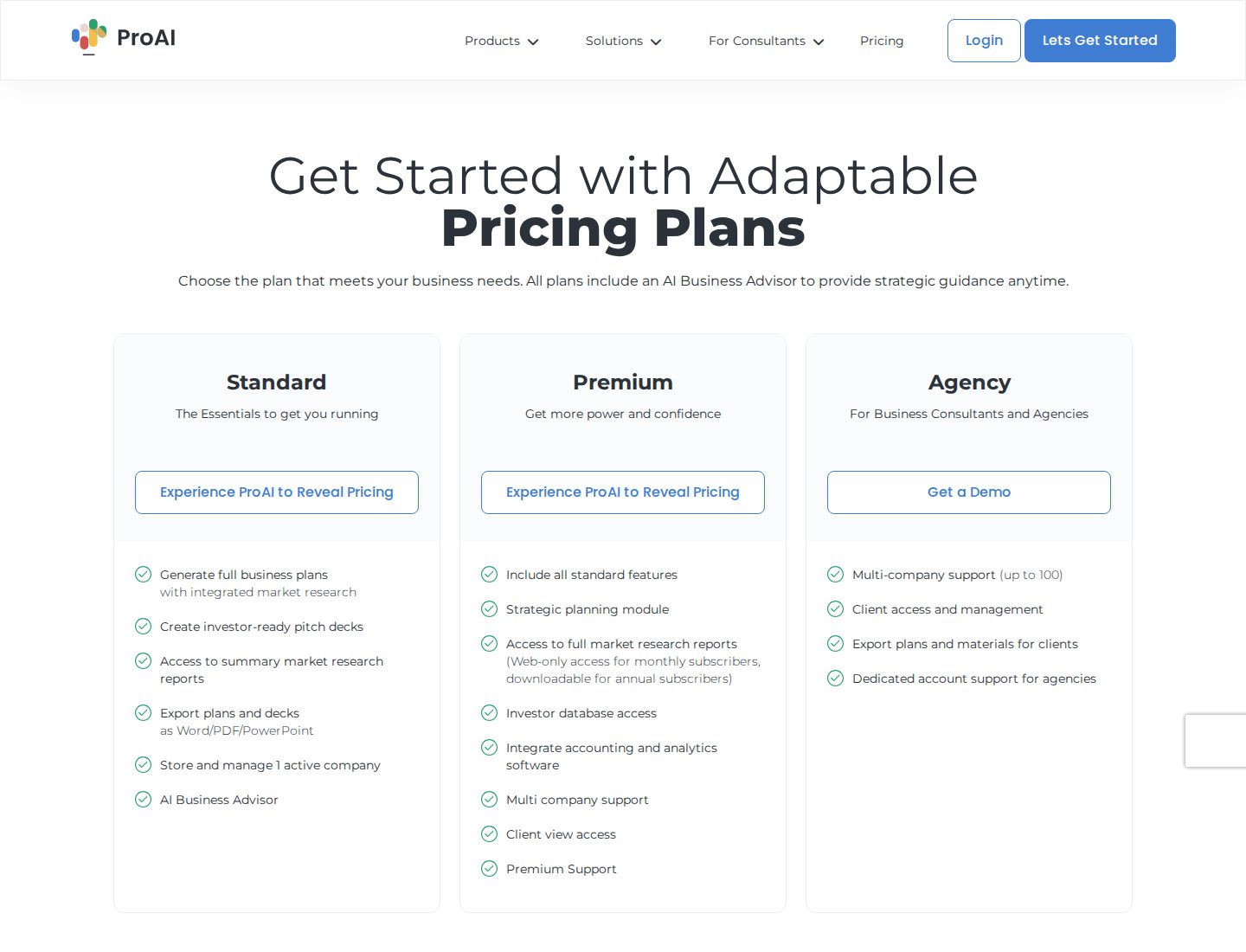
- Annual pricing up front. Because users paid after seeing their own plan, we could charge a full year up front, at about what a freelancer would charge for a one-off plan. That recovered ad spend quickly, which mattered because we had no outside capital.
20% of users who completed the funnel and saw their plan went on to buy, about five times the industry average, and paid acquisition returned about 4x ROAS. The model was widely copied afterward.
05
Separating the two brands
With GPT-4 it was clear the models would keep getting better quickly. Some of the consulting firm’s smallest clients started choosing ProAI instead. I expected some overlap at the low end, but it came sooner than planned, so I made the two offerings clearly distinct.
- Moved the services business upmarket. I repositioned Pro Business Plans as more premium and hands-on, rebuilt every sample and tier, and focused on the mid-market and above.
- Spun ProAI out. Reviews praising ProAI as “fast” and “affordable” were landing on the premium consulting brand. I moved ProAI from the subdomain to its own domain, proai.co: a standalone software product built on a consulting firm’s material.
- Rebuilt brand proof. ProAI had relied on the firm’s reputation, so I ran a review and PR program to give it its own.
Users came to include people at the Abu Dhabi Investment Authority, Keiretsu Forum, Small Business Development Center consultants, and boutique M&A, CPA and consulting firms.
06
From one-time plans to ongoing use
At about 4x ROAS, acquisition was solved. The next question was usage. Surveyed customers were happy and planned to update their plan quarterly or yearly. I wanted something stickier: a data flywheel where the product improved as people used it.
The question I set for the team: how do we deliver what a top consulting firm delivers to the mid-market and below? Answering it took four lines of discovery:
- Experts. Recruited subject-matter experts from Deloitte, BCG, Accenture and others to map how advisory work is actually delivered.
- Customer interviews. Ran one-on-one 45-minute calls with existing customers, offered a free upgrade for their time, to rank roadmap options against each customer profile.
- Random sampling. Called randomly selected users to measure satisfaction and likelihood to recommend.
- Upmarket exploration. Talked to non-users in upper mid-market and enterprise. Decided not to pursue them because of long sales cycles and a poor fit with our customer profile.
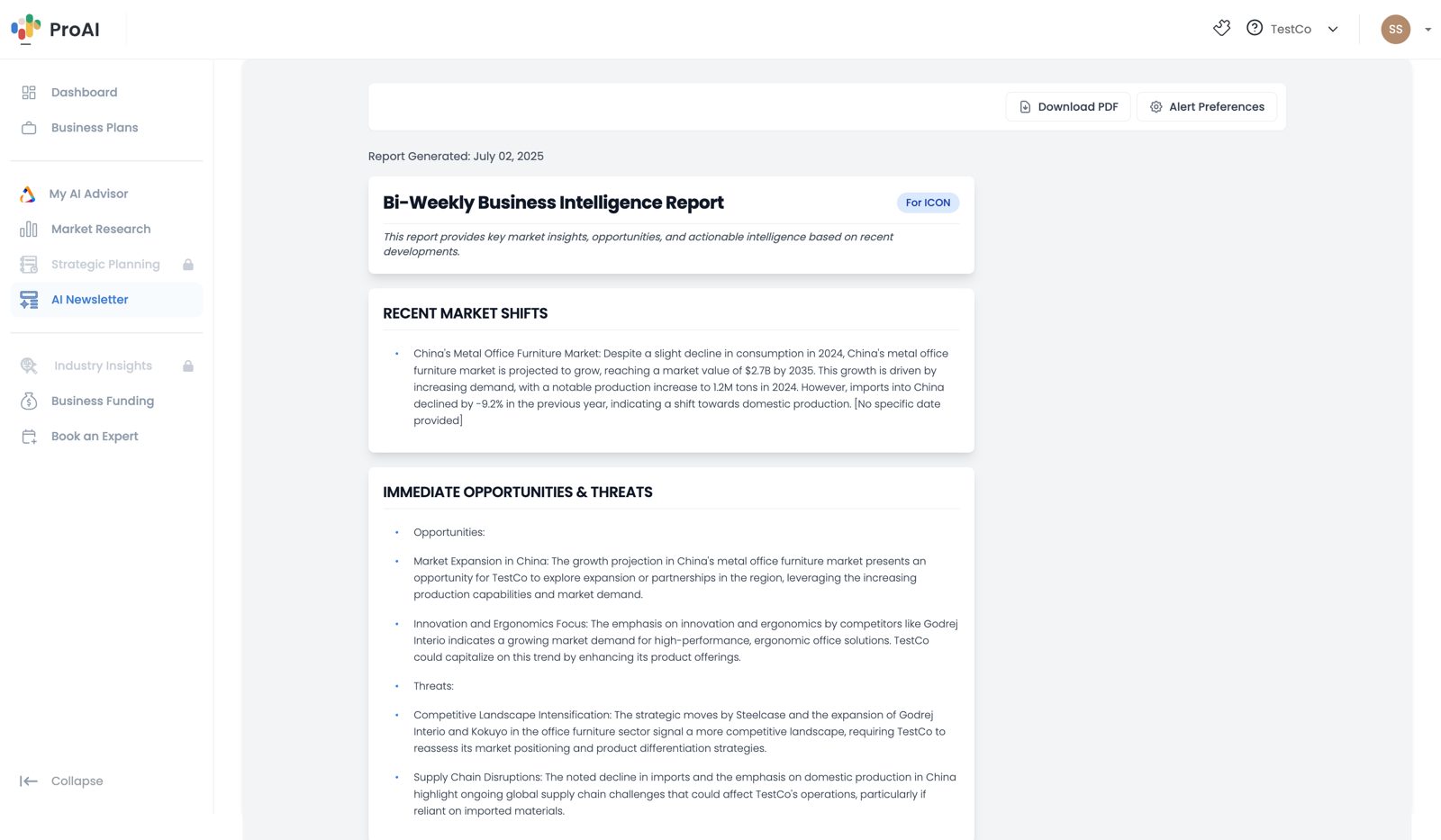
The answer was the company’s own data. In 2023, agents struggled with more than a few tools and could not navigate APIs on their own. So we built deterministic connectors starting with QuickBooks and Xero, plus a normalization pipeline to reconcile their formats. Nango, which had just launched, handled authentication. On top of that we launched the Market Monitor suite, covering 1,000+ real-time data sources, which lifted retention by 20%.
07
Agents, before the word stuck
By 2024, clones had multiplied and ChatGPT had improved. ProAI’s output was still clearly better, because we had largely solved the math and hallucination problems, but users were now comparing options. I did not want to compete on price.
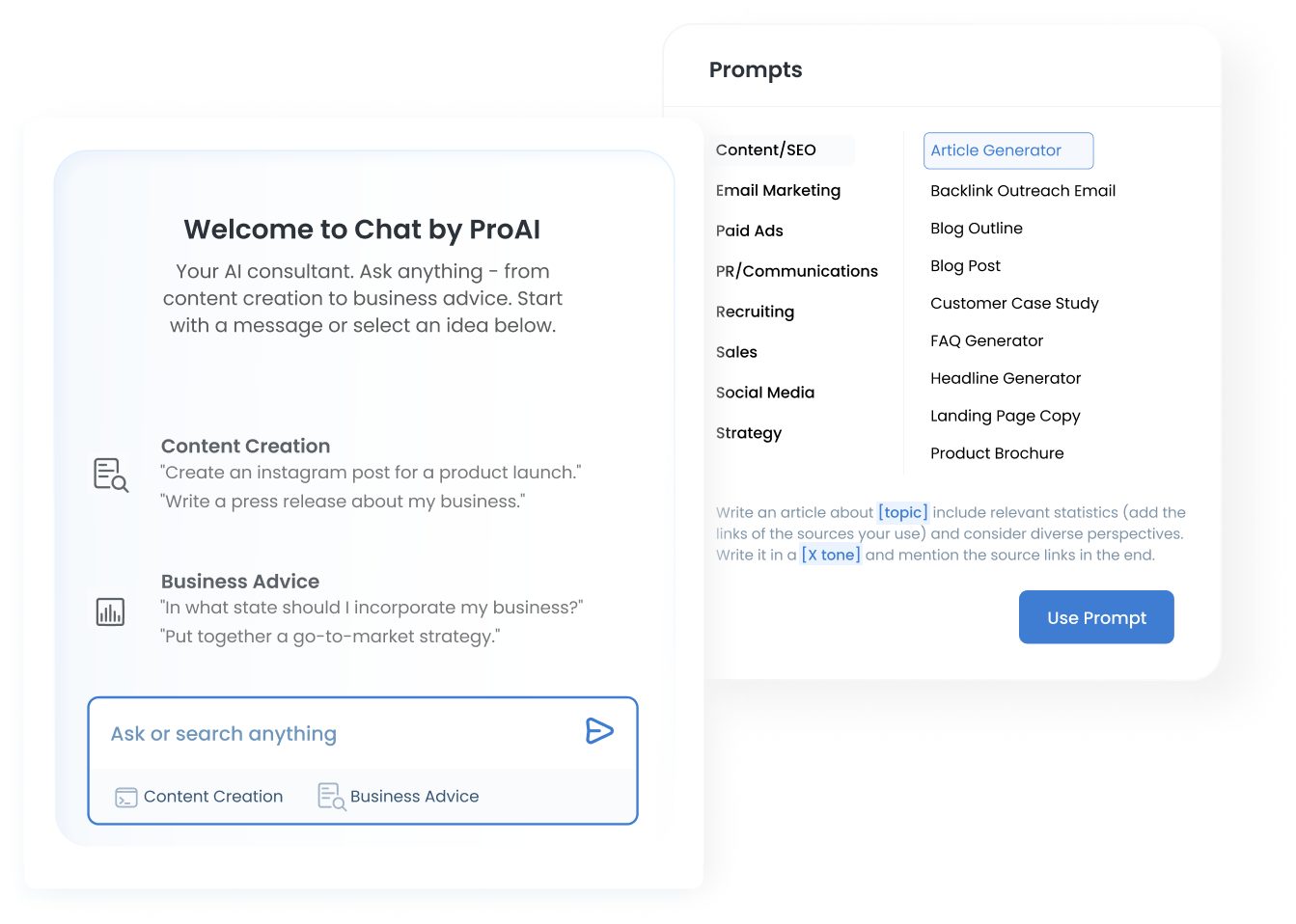
Instead I built the roadmap around agents that work across several of a company’s data systems, with the business plan as the base layer: quarterly and annual objectives, FP&A data and marketing performance. The idea was something like Anaplan, but done for the user. The first piece was a forecasting agent that used the Python financial model as its harness and ProAI’s market research as grounding. The company was acquired before it shipped. The agent-builder work from this period later became Braid, which ran in production at ProAI on live accounting data.
08
Outcome
In 2024, one of our subject-matter experts joined a private-equity firm and proposed acquiring ProAI as the platform for a roll-up. That prompted me to sell. I chose a different buyer on better terms, and ProAI was acquired in 2025.
09